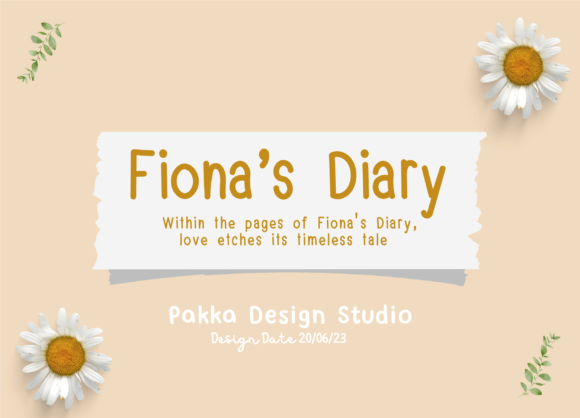
Princess-Inspired Typography: The Fiona's Diary Aesthetic
There is a specific moment in creative development where a project demands more than just text; it demands a voice. We often talk about brand identity in terms of color palettes and logos, but the typography you choose is the literal voice of your content. When a brief calls for whimsy, femininity, and a touch of royal elegance, generic sans serif fonts often fall flat. This is where the Fiona's Diary script font enters the conversation. It is not merely a collection of letters; it is a carefully crafted premium font designed to emulate the delicate, flowing strokes of a princess’s private journal.
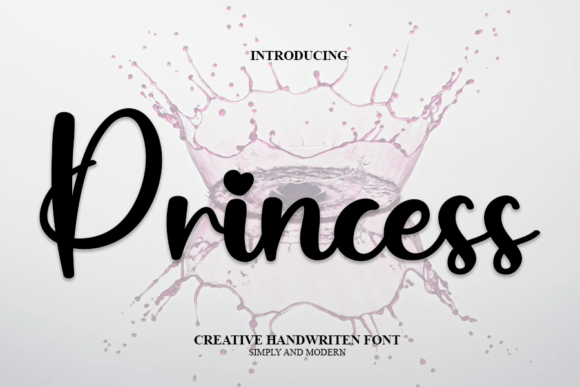
The defining characteristic of this typeface is its monoline structure. In typography, "monoline" refers to a consistent stroke width throughout the letterform. Unlike traditional calligraphy, which relies on pressure variation to create thick and thin strokes, Fiona's Diary maintains a uniform weight. This results in a handwritten font that feels clean, polished, and surprisingly modern. It captures the "enchanting essence" of fairy tales without sacrificing legibility. For designers, this consistency is a lifesaver when working on web design or small-scale packaging design, where high-contrast script fonts can often break down or look muddy.
Visual Personality and Stylistic Nuances
Understanding the personality of a font is crucial for brand strategy. Fiona's Diary possesses a distinct "regal undertone" that separates it from casual, messy handwriting styles. It evokes the imagery of a velvet-bound book or an invitation to a garden party. The connections between letters are smooth and effortless, creating a natural rhythm that guides the eye across the page. This is the kind of creative font that adds texture to a design. It does not scream for attention; rather, it whispers with sophistication.
However, it is vital to recognize its classification. While it has the flair of a display font, it is technically a script font. This distinction matters when planning your visual hierarchy. You would not use Fiona's Diary for long-form body copy in a magazine; that is the job of a legible serif font or sans serif font. Instead, Fiona's Diary shines in headlines, pull quotes, and hero text where its intricate details can be appreciated. Its whimsical charm makes it an asset for projects targeting an audience that values aesthetics, from bloggers to boutique entrepreneurs.
Strategic Applications: Where Magic Meets ROI
As a creative professional, you need to know exactly where a font like this delivers the highest return on investment. The versatility of Fiona's Diary allows it to bridge the gap between digital and physical mediums, provided the context is right.
Digital Presence and Social Media
In the realm of social media graphics, attention is currency. The unique monoline style of Fiona's Diary stops the scroll. It works exceptionally well for Instagram quotes, Pinterest pins, and YouTube thumbnails where a feminine or aspirational tone is required. For web design, it is best used sparingly—perhaps in the masthead of a lifestyle blog or as decorative elements on a landing page. Because it is a premium font, it helps elevate the perceived value of digital products, signaling to the customer that the creator cares about quality details.
Branding and Physical Products
For small business owners, particularly those in the wedding, beauty, or children's markets, this font is a powerful tool for logo design. Imagine a bridal boutique or a high-end patisserie using Fiona's Diary for their wordmark. It instantly communicates elegance and care. In packaging design, the clean monoline weight ensures that the text remains legible even on curved surfaces like perfume bottles or candle jars. It transforms a simple label into a design asset that tells a story. Furthermore, for publishing, this typeface is an excellent choice for book covers in the romance or young adult genres, offering a modern typography take on classic fairy tale aesthetics.
Technical Evaluation and Font Pairing
Choosing a font is only half the battle; integrating it into a cohesive design system is the other half. To get the most out of Fiona's Diary, you must consider how it interacts with other design assets.
The Art of Font Pairing
Because Fiona's Diary is ornate and stylistic, it demands a grounding partner. A common mistake in editorial design is pairing a script font with another decorative font. Instead, look for a neutral, geometric sans serif font or a sturdy, traditional serif font. The contrast between the whimsical, flowing strokes of the diary font and the structured rigidity of the body text will create a dynamic visual hierarchy. For example, pairing it with a clean sans serif for subheadings allows the "princess" aesthetic to shine without overwhelming the reader. This balance ensures your brand identity feels professional rather than chaotic.
Readability and Licensing
Before finalizing your choice, always test the font at the size you intend to use it. While Fiona's Diary is designed for clarity, all script fonts require adequate white space. Check the kerning (space between letters) and leading (space between lines) to ensure the tails of the letters do not collide with the lines below them. Additionally, for commercial font usage, verify the licensing. If you are a content creator selling merchandise or a marketer creating ads, you need to ensure your license covers commercial distribution. Most premium font foundries offer clear tiers for this, protecting both the designer and the client.
Ultimately, Fiona's Diary is more than just a handwritten font; it is a stylistic bridge between childhood wonder and adult sophistication. For the designer or entrepreneur who needs to evoke a sense of magic, grace, and femininity, this monoline script offers a reliable, high-quality solution. It proves that in the world of modern typography