Happy Bee: A Font That Brings Joy to Every Design
More Than Just Letters on a Page
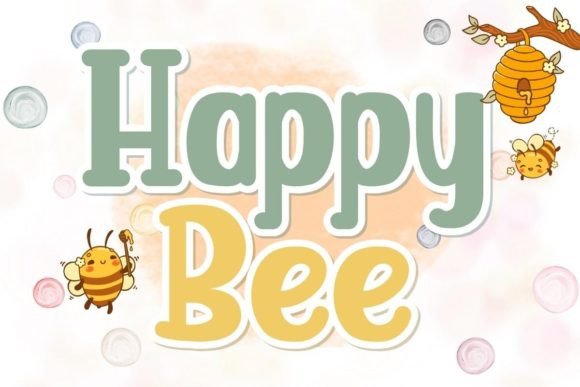
There’s a certain kind of warmth you feel when you see a handwritten note from someone you care about. It’s personal, immediate, and full of character. That’s the feeling the Happy Bee font captures so effectively. This isn’t a cold, geometric typeface you’d use for a technical manual. It’s a handwritten font with a distinct personality—playful, approachable, and genuinely cheerful. Each letterform feels like it was drawn with a relaxed hand and a smile, featuring gentle curves, slightly uneven baselines, and a natural flow that mimics real handwriting. The overall effect is a typeface that feels human and inviting, designed to make your audience feel good the moment they see it.
As a creative font, Happy Bee occupies a specific and valuable niche. It’s not trying to be a serious serif font for academic papers or a stark sans serif font for minimalist tech branding. Its strength lies in its ability to inject personality and joy. Think of it as the friendly neighbor of the typography world. It’s perfect for projects where you want to communicate warmth, creativity, and a personal touch. Whether you’re a small business owner designing packaging, a blogger crafting social media graphics, or a crafter making a birthday card, this font brings a level of charm that’s hard to replicate with more formal typefaces.
Where Happy Bee Truly Shines
Understanding a font’s ideal context is key to using it well. Happy Bee is a versatile display font, meaning it’s best suited for headlines, logos, and short bursts of text where you want to make an immediate impact. Its legibility at larger sizes is excellent, making it a reliable choice for projects where visual appeal is the priority. For instance, in logo design for a boutique bakery, a children’s brand, or a handmade jewelry shop, Happy Bee can instantly establish a friendly and approachable brand identity. It tells customers, “We’re here to make something wonderful for you.”
Its applications extend far beyond logos. Consider packaging design for artisanal goods. Using Happy Bee on a label for homemade jam or scented candles can make the product feel more authentic and special. In the realm of social media graphics, it’s a powerhouse. A quote card, an Instagram story promotion, or a Facebook event announcement set in Happy Bee will stand out in a feed full of generic text, encouraging higher engagement. For editorial design, it might be too casual for body text in a novel, but it’s fantastic for chapter headings in a recipe book, pull quotes in a lifestyle magazine, or titles in a DIY blog post. Even in web design, it can be used strategically for specific elements like a call-to-action button or a featured product name to add a burst of personality without compromising the site’s overall usability.
Practical Tips for Pairing and Using Happy Bee
A great font rarely works in isolation. The true magic happens in pairing. Because Happy Bee is a script font with a strong personality, it needs a more neutral partner to create balance and ensure readability. This is where classic font pairing principles come into play. Pair it with a clean, simple sans serif font like Montserrat, Lato, or Open Sans for body text. This contrast allows Happy Bee to be the star of the show for headlines while the supporting font handles longer paragraphs with clarity. Avoid pairing it with another decorative or handwritten font, as that can create visual chaos and undermine professionalism.
Before you commit, always test the font in your specific context. Type out the actual words you’ll be using. Does it read well? The connections between letters are generally smooth, but always check for any awkward combinations. Review the included character set. A quality premium font like Happy Bee often includes alternate characters, ligatures, and swashes that allow for even more customization and flair. Don’t overlook these features—they can help you create unique, one-of-a-kind designs. Finally, a crucial step for any commercial project: verify the licensing. Ensure the license covers your intended use, whether it for personal craft projects, commercial merchandise, or digital products. Respecting the font creator’s terms is essential for ethical design practice.
Readability and Brand Perception
While Happy Bee excels in charm, mindful application is key. Its readability decreases significantly at small sizes, so avoid using it for fine print, lengthy disclaimers, or body copy. Its role is to draw the eye and set a tone, not to deliver dense information. When used correctly, it profoundly influences how a brand is perceived. It signals creativity, approachability, and a hands-on, personal touch. This can be a tremendous asset for building recognition and fostering a connection with an audience that values authenticity and craftsmanship. It’s a tool for storytelling, helping you convey that your brand is human, caring, and full of life.
A Final Thought on Choosing Your Tools
Choosing a typeface like Happy Bee is ultimately a design decision that should align with your project’s goals and audience. It’s not the right tool for every job, but for the right job, it’s exceptional. It’s a design asset that can help you create stylish designs that resonate emotionally. Whether it’s gracing a wedding invitation, a startup’s business card, or a bestselling ebook cover, this font has the power to transform standard text into something memorable. So, when your project calls for a dose of happiness and human connection, give Happy Bee a try. Let it do what it does best: make your designs feel a little more joyful.