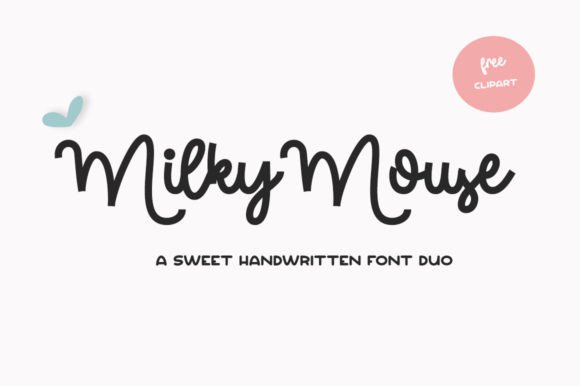
Milky Mouse: A Versatile Duo Font for Playful Design Projects
Every designer hits a point where a project needs a shot of personality. You have the layout, the color palette, and the imagery, but the typography feels flat. This is where a font like Milky Mouse steps in. It’s not just another typeface; it’s a creative tool designed to inject immediate character and warmth. As a versatile duo font pairing a flowing script with a clean display, Milky Mouse offers a complete solution for projects that need to feel approachable, fun, and authentically human.
Understanding the Milky Mouse Typeface
At its core, Milky Mouse is a premium font built for impact. The script component mimics natural, fluid handwriting, with gentle loops and a slight bounce that feels spontaneous rather than rigid. It carries the energy of a handwritten note, making it perfect for personal touches, quotes, or headlines that demand emotional connection. Paired with this is its display counterpart—a complementary sans serif or block letter style that provides structure and clarity. This duo approach is its greatest strength, allowing you to create visual hierarchy within a single font family. You can use the script for a hero headline and the display for supporting text, or mix them for dynamic compositions. The overall aesthetic is modern typography with a playful, craft-inspired twist, making it a standout creative font in any designer’s toolkit.
Where This Creative Font Truly Shines
The real value of Milky Mouse is in its application. It’s a typeface that understands context. For logo design, especially for boutique brands, children’s products, cafes, or lifestyle blogs, it offers instant recognition and charm. The script leg works beautifully for a primary logotype, while the display style can anchor a tagline or secondary text. In packaging design, it can transform a simple label into something delightful, suggesting a handmade or artisanal quality. Think of a gourmet jam label or a cosmetics box—Milky Mouse adds that sought-after personal touch.
Beyond physical products, its utility extends into digital and publishing. For social media graphics, it cuts through the noise with its friendly vibe, perfect for Instagram quotes, story headers, or promotional banners. Bloggers and content creators will find it invaluable for creating cohesive brand identity across headers, Pinterest pins, and email newsletters. In editorial design, it can be used sparingly for pull quotes or section dividers to break up dense text and add visual interest. Even for personal projects like wedding invitations, greeting cards, or scrapbooking, it provides a professional finish that elevates the work from homemade to crafted.
Making Strategic Design Decisions with Milky Mouse
Choosing a font is a strategic decision that influences how your audience perceives your message. Milky Mouse, with its friendly and approachable personality, can soften a brand’s tone, making it feel more accessible and trustworthy. This is particularly valuable for small business owners and entrepreneurs who want to build a personal connection with their customers. It helps create a brand identity that feels human rather than corporate. However, context is everything. While it’s a powerful creative asset, it’s not the right choice for every situation. A law firm’s annual report or a technical whitepaper would call for a more neutral serif or sans serif font. Milky Mouse thrives in environments where warmth, creativity, and approachability are the goals.
Practical Guidance for Implementation
Before committing to Milky Mouse for a project, a few practical steps ensure success. First, evaluate the project fit. Does the core message align with a playful, handcrafted feel? If the answer is yes, it’s a strong candidate. Next, test font pairings. While the duo is designed to work together, you’ll likely need a third, neutral font for body copy. Pair the Milky Mouse display style with a simple, readable sans serif for paragraphs to maintain clarity. The script is best reserved for headlines or short accents where its character can be fully appreciated without sacrificing readability.
Always review the included styles and glyphs. A key feature of Milky Mouse is its PUA encoding, which means you can easily access all its alternate characters, ligatures, and swashes. This is where you unlock its full potential. Using OpenType features in design software like Adobe Illustrator or Photoshop allows you to customize letterforms, ensuring each word looks unique and intentional. For web design, ensure your licensing covers webfont use and test the rendering across different browsers and devices. For print, always outline your fonts or embed them properly in the final PDF to avoid missing font errors.
Finally, consider the commercial licensing. If you’re using Milky Mouse for client work, merchandise, or digital products for sale, confirm the license covers that use. Most premium font licenses are clear, but it’s a critical step to avoid issues down the line. By taking these practical measures, you move from simply using a font to strategically wielding a design asset. Milky Mouse, when used thoughtfully, becomes more than just a typeface—it becomes a key part of your visual storytelling, helping you connect with your audience in a genuine and memorable way.