InkPen: The Handwritten Font for Playful Design
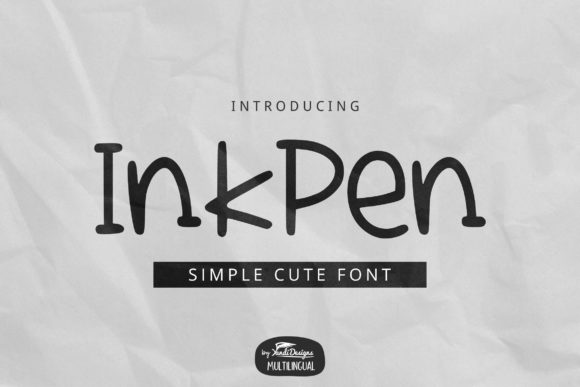
When a design needs to feel personal, approachable, and a little bit whimsical, the right typeface can do most of the heavy lifting. This is where InkPen enters the conversation. It’s a cute and quirky handwritten font that carries a distinctly lovely and childish charm. Think less about formal correspondence and more about a child’s joyful scrawl, refined into a versatile digital tool. Its letters dance with a gentle inconsistency, mimicking the natural pressure and flow of a real pen on paper. This isn't a font that tries to be perfect; its beauty lies in its authentic, hand-drawn feel.
For designers, marketers, and entrepreneurs, understanding a font's personality is crucial. InkPen projects warmth, creativity, and informality. It’s the visual equivalent of a friendly conversation. The slightly rounded terminals and varied baseline give it a soft, approachable character that can immediately soften a brand's tone or make a project feel more human. This makes it a fantastic display font for headlines where you want to capture attention with personality rather than authority. Its strength is in evoking a specific feeling—nostalgia, playfulness, and genuine care—which can be a powerful tool in your design assets toolkit.
Where This Creative Font Truly Shines
Knowing a font’s personality is one thing; knowing where to deploy it is where the real strategy comes in. InkPen isn't a workhorse for body copy; it’s a specialist for projects that need a dose of character. Its applications are broad across both personal and commercial realms.
- School & Educational Projects: This is its natural habitat. From classroom posters and bulletin boards to student certificates and book covers for young readers, InkPen instantly communicates a fun, learning-focused environment. Its childish appeal makes content more engaging for a younger audience.
- Branding & Packaging Design: Imagine a local bakery’s logo, the label for an artisanal jam, or packaging for a line of natural children’s toys. InkPen can help craft a brand identity that feels homemade, authentic, and trustworthy. It tells customers there’s a real person behind the product.
- Digital & Social Media Graphics: In the crowded space of social media, a handwritten font like InkPen can stop the scroll. It’s perfect for Instagram quotes, Pinterest pins, and YouTube thumbnails where a personal touch boosts engagement. It makes digital communication feel less corporate and more conversational.
- Editorial & Publishing: While not for the main text of a novel, it’s excellent for chapter titles in a children’s book, subheadings in a lifestyle magazine, or pull quotes in a blog post. It adds visual interest and breaks the monotony of standard serif font or sans serif font layouts.
- Personal Crafts & Invitations: For crafters and hobbyists, this font is a gem. It’s ideal for creating custom greeting cards, wedding invitations with a rustic theme, scrapbook titles, or DIY labels for home organization. It brings a heartfelt, crafted quality to any project.
Practical Guidance for Using InkPen Effectively
Choosing a creative font is just the first step. Using it well requires a bit of strategic thinking to ensure it enhances rather than hinders your project. Here’s how to approach InkPen with a professional’s eye.
Evaluating Project Fit and Readability
Always start by asking: does this project need to feel playful and personal? If the answer is yes, InkPen is a contender. However, its handwritten font nature means prioritizing readability. Test it at the actual size it will be used. A headline on a poster? Likely perfect. A 12-point caption on a website? Might become a strain to read. The key is to use it for short bursts of text—headlines, logos, call-to-action buttons—where its charm can be appreciated without compromising clarity.
Mastering Font Pairing for Visual Hierarchy
A premium font like InkPen rarely works in isolation. Its true power is unlocked through thoughtful font pairing. Because it’s so expressive, it pairs best with clean, neutral typefaces. A classic combination is with a simple sans serif font. The sans serif provides stability and readability for longer text, while InkPen adds personality to headings. Alternatively, pairing it with a traditional serif font can create a compelling contrast between the formal and the informal, the old and the new. This contrast is fundamental to creating clear visual hierarchy in editorial design or web design.
Considering the Technical and Legal Details
Before finalizing your choice, review the font package. A quality commercial font will often include multiple styles—perhaps a regular, bold, or italic version of InkPen. Check for OpenType features like alternate characters or ligatures that can add even more variety to your text. Most importantly, understand the licensing. If you’re using it for a client’s logo design, a product you sell, or on a monetized blog, you need to ensure you have the correct commercial font license. This is a non-negotiable part of professional practice and protects both you and your clients.
In the end, InkPen is more than just a collection of letterforms. It’s a design solution for injecting warmth, character, and a human touch into a project. It won’t be the right fit for every job, but when the brief calls for something less serious, more joyful, and genuinely approachable, it’s a typeface that delivers real-world value. By understanding its personality, applying it strategically, and pairing it wisely, you can leverage this modern typography gem to connect with your audience on a more personal level.