Bring Playful Energy to Your Projects with Kids
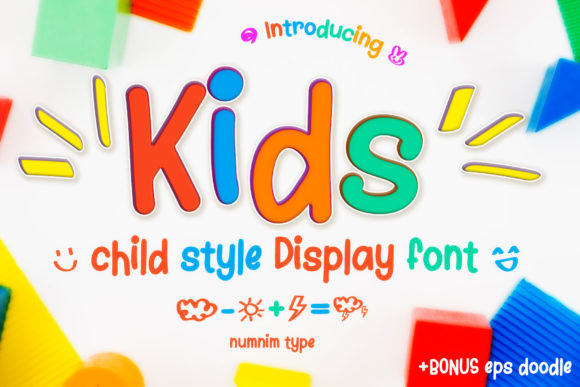
There is a specific kind of creative challenge that arises when a project requires a sense of innocence, joy, or raw, unfiltered energy. We often spend hours sifting through overly polished sans serif font families or rigid serif font options, trying to force a stiff typeface to act casual. It rarely works. If you are working on a brand identity for a toy store, designing packaging design for organic children’s snacks, or laying out a scrapbook page, you need typography that feels human. This is exactly where Kids, a premium font with a distinct personality, becomes an indispensable tool in your design assets library. It is not just a set of letters; it is a handwritten font that captures the messy, beautiful reality of a child’s penmanship, elevated into a professional typeface that maintains high standards of legibility.
Understanding the Visual Character
When you first look at the Kids font, the immediate impression is one of authenticity. Unlike many "handwriting" fonts that look like they were drawn by a robot trying to mimic a human, Kids embraces the quirks of actual hand-lettering. It has a natural bounce to the baseline—the letters don't sit in a perfectly straight line, which mimics how a child naturally writes on lined paper. The strokes have varying weights, simulating the pressure of a marker or crayon, yet the lines are smooth enough to be used in professional editorial design and web design. This balance is crucial. You want the charm of a script font without the headache of trying to decipher what the letters actually say. The Kids creative font manages to be bold and expressive while remaining clear, making it a standout display font choice for headlines and titles.
Strategic Applications for Branding and Marketing
For designers and entrepreneurs, choosing a typeface is a strategic business decision. Typography dictates how a customer feels about a product before they even read the copy. Kids is particularly effective in industries where trust, approachability, and creativity are the primary selling points. If you are a blogger or publisher focusing on parenting, education, or lifestyle content, using this font for your headers can instantly soften your visual hierarchy, making your site feel more welcoming and less corporate.
Consider the impact on social media graphics. In a feed dominated by bold, geometric sans-serifs and minimalist aesthetics, a handwritten style like Kids can act as a pattern interrupt. It grabs attention because it feels personal and intimate. For small business owners, specifically those selling handmade goods or educational services, this font helps build a brand perception that is grounded in real human connection rather than mass production. It signals that there is a person behind the brand who cares about fun and authenticity.
Furthermore, packaging design for the education sector benefits immensely from this style. School supplies, lunchboxes, and notebooks often rely on bright colors and energetic typography. Kids fits this niche perfectly, offering a modern typography solution that feels contemporary yet timeless in its nostalgic appeal. It avoids looking "babyish," which is a common pitfall of children’s fonts, ensuring the product appeals to both the child using it and the adult purchasing it.
Technical Readability and Design Hierarchy
One of the most common questions regarding handwritten font choices is readability. While a flowing script font might look beautiful on a wedding invitation, it can be disastrous on a product label or a website button. Kids addresses this by maintaining open counters and distinct letter shapes. The "a" looks like an "a," and the "g" is recognizable, preventing the visual confusion that plagues more abstract typefaces.
When integrating Kids into your layout, it is best used for display purposes. Think headlines, pull quotes, and call-to-action phrases. It excels at creating a strong focal point. However, for body text, you should pair it with a highly legible sans serif font or a clean serif font. This contrast creates a professional font pairing strategy. The Kids font draws the eye and sets the emotional tone, while the supporting font delivers the detailed information with clarity. This approach ensures your logo design or page layout feels dynamic and well-structured, guiding the reader's eye naturally through the content.
Practical Tips for Implementation
Before you commit to using Kids in a large-scale project, take the time to evaluate how it interacts with your other design elements. Because it has a strong personality, it can easily clash with busy backgrounds or overly detailed illustrations. It needs breathing room to shine. When working on web design, ensure that the font size is large enough to appreciate the details of the letterforms. Small sizes can cause the handwritten nuances to blur into pixels, losing the very charm that makes the font effective.
Additionally, always review the licensing details for any commercial font. If you are using Kids for a client’s logo design or a commercial product line, verify that your license covers the specific usage. Most premium font foundries offer clear terms, but it is the mark of a professional designer to double-check these details to protect both yourself and your client. By using Kids