Pickley: The Watercolor Bitmap Font for Bold, Artistic Headers
Every designer knows the struggle: finding a typeface that carries genuine texture and personality without looking like a stock template. You want something that feels handcrafted, organic, and full of life, especially for display work. Enter Pickley, an OpenType-SVG bitmap font that breaks away from the sterile precision of standard vector typography. Born from a popular watercolor alphabet, this font brings a distinct, artistic flair to any project where a standard serif font or sans serif font just won’t cut it.
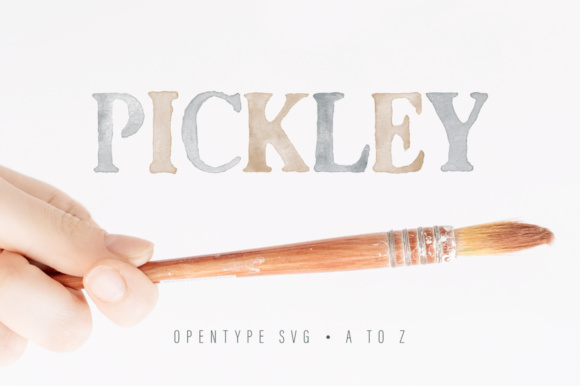
Unlike traditional fonts that rely on solid vector shapes, Pickley utilizes color font technology to embed actual watercolor textures directly into the glyphs. When you type with Pickley, you aren’t just laying down digital ink; you are stamping down painted brushstrokes. This makes it a powerful creative font for anyone looking to add a tactile, handmade quality to their brand identity or design assets. It captures the nuance of hand-lettering—the slight bleed of the paint, the varying opacity, and the organic edges—perfectly preserved in a digital format.
Visual Character and Personality
Pickley is undeniably a display font, meaning it is designed specifically for impact rather than body copy. Its visual style is bold, playful, and distinctly "arts and crafts." The letters feature a rough, textured finish that mimics the look of watercolor paint on high-quality paper. Because it is a bitmap font, the edges are rasterized, giving it a unique pixel-art quality when zoomed in, yet appearing as soft, painted strokes at normal viewing sizes.
The personality of this typeface is approachable and energetic. It avoids the stiffness of corporate modern typography in favor of something more human and expressive. It is the kind of font that makes a viewer feel a sense of warmth and creativity before they even read the words. However, it is important to note the scope of the tool: Pickley is limited to the alphabet and basic punctuation. It does not include numbers or multilingual glyphs. This limitation actually reinforces its purpose—it is a specialized tool for catchy headers, logos, and short bursts of text, not for writing an essay.
Strategic Applications for Designers and Creators
Knowing where to deploy a premium font like Pickley is key to successful design strategy. Because of its heavy texture and distinct style, it works best in scenarios where text needs to be seen, felt, and understood quickly.
Branding and Logo Design
For small business owners, entrepreneurs, and crafters, a logo design needs to communicate values instantly. Pickley is an excellent choice for brands that identify as organic, handmade, artistic, or whimsical. Imagine a bakery, a pottery studio, or a children’s art school using this font. It instantly signals that the business is creative and approachable. However, for brand identity consistency, remember that you cannot use this font for your legal disclaimers or address blocks due to the character limitations; you will need a secondary, clean font for that information.
Packaging and Product Design
In packaging design, shelf appeal is everything. Pickley can elevate a product label from generic to artisanal. It is particularly effective for "flavor of the month" callouts, sale tags, or product names on physical goods. If you are selling jams, candles, or art supplies, this font adds a layer of perceived quality and care that sterile, standard fonts cannot replicate.
Digital and Social Media
The digital space is crowded, and grabbing attention on platforms like Instagram or Pinterest requires strong visuals. Social media graphics benefit immensely from high-contrast text. Using Pickley for a "New Post" announcement or a quote graphic can stop the scroll. It provides a textured background that looks great overlaid on photos, provided the image isn't too busy. It is also a fantastic asset for web design, specifically for hero images or landing page headers where you want to make an immediate emotional impact.
Publishing and Editorial
For publishers and bloggers, editorial design relies on visual hierarchy. Pickley is perfect for chapter titles, pull quotes, or article headers. It pairs exceptionally well with a clean, readable body font. The contrast between the textured, painted header and the crisp, digital body text creates a sophisticated visual rhythm that guides the reader’s eye.
Typography Strategy: Pairing and Hierarchy
One of the most common mistakes in modern typography is using two complex fonts that fight for attention. Since Pickley is a highly stylized handwritten font (or rather, hand-painted), it demands a quiet partner.
The Perfect Font Pairing
To let Pickley shine, pair it with a neutral sans serif font or a traditional serif font. Think of fonts like Montserrat, Open Sans, or even a classic Garamond. The simplicity of the body text will frame the artwork of the Pickley headers. Avoid pairing it with other script fonts or overly decorative typefaces, as this will create visual chaos and hurt readability.
Readability and Visual Hierarchy
Because Pickley has a lot of texture, it performs best at larger sizes. When used too small, the watercolor details can turn into visual noise, making the text illegible. Always test your headers at the size they will be viewed. If you are designing for web design, ensure the text is large enough that the "painted" edges remain distinct and don't blur into a messy blob on mobile screens.
Technical Compatibility and Workflow
As a professional, you need tools that work within your existing ecosystem. Pickley is an Opentype-SVG color font. This is a crucial technical detail to understand before purchasing or using it.
First, check your software compatibility. Pickley works seamlessly in PhotoShop, Illustrator, Silhouette, and Inkscape. These programs support the complex rendering required for color fonts. If you are a crafter who relies heavily on Cricut machines, be aware that Pickley is not compatible with Cricut design software. Cricut generally struggles with the raster data inside SVG fonts, so this is a hard technical limitation to keep in mind.
Second, treat the font as a design asset rather than just a utility. Since it includes only letters and basic punctuation, you cannot use it for data-heavy designs like event schedules or pricing lists. Plan your layout so that the numerical data is handled by a complementary font, maintaining the aesthetic flow without sacrificing information.
Making the Right Choice
Choosing a font is a decision about voice. Does the voice of your project sound like a corporate memo, or does it sound like a friend sharing a creative idea? If your answer is the latter, Pickley is likely a strong contender.
Before finalizing your design, download the files and test them with your specific brand colors. Because Pickley is a color font, it renders in a specific watercolor palette, but in some software, you may be able to alter the color of the base layer. Experiment with how it looks against different backgrounds to ensure the readability holds up.
Ultimately, Pickley is more than just a creative font; it is a piece of art. It bridges the gap between traditional painting and digital design, offering a unique texture that can elevate a project from "standard" to "standout." Whether you are designing a wedding invitation, a product label, or a social media campaign, this typeface offers a refreshing break from the rigid geometry of standard digital typography.