Bigland Retro: Logotype Style for Modern Branding
Capturing the Spirit of the Past with a Modern Edge
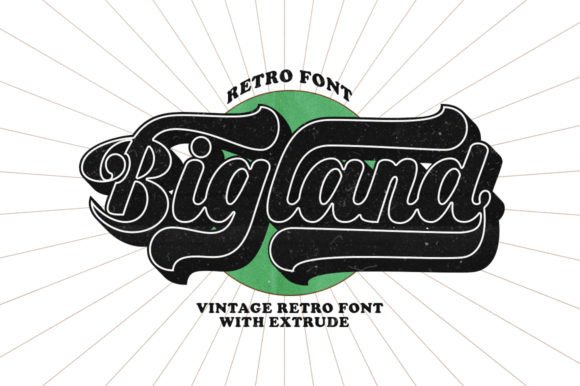
Finding a typeface that balances nostalgia with contemporary appeal is a common challenge for creatives. You want something that feels established and trustworthy, yet fresh enough to stand out in a crowded digital space. Bigland Retro answers this need directly. It is an urban retro font designed specifically to emulate the confident, stylized look of classic logotype lettering. This isn't just a standard display font; it carries the weight and character of hand-painted signage and vintage branding, bringing an authentic texture to modern design work.
The visual personality of Bigland Retro is bold and unapologetic. It draws heavy inspiration from mid-century aesthetics, a period known for strong typography and distinct branding. When you look at the letterforms, you will notice the subtle variations in stroke width and the slightly condensed structure, which creates a sense of urgency and importance. This makes it an excellent choice for headlines and hero text where you need to grab attention immediately. It avoids the stiffness of many digital fonts, offering a warmth that resonates with audiences looking for authenticity. While it functions as a serif font in some contexts due to its decorative details, its primary role is as a distinct display typeface meant for short, impactful bursts of text.
Practical Applications: From Brand Identity to Packaging
Understanding where Bigland Retro fits best is key to using it effectively. In the realm of logo design, this typeface shines. Its structure mimics the custom lettering often found in professional logotypes, meaning it can serve as a strong foundation for a brand identity without requiring extensive modification. Entrepreneurs and small business owners, particularly those in the lifestyle, food, or apparel sectors, will find that Bigland Retro instantly communicates a sense of heritage and quality. It suggests that the brand has a story to tell, which is a powerful psychological trigger for consumers.
Beyond logos, the font is highly versatile across various design assets. Consider packaging design, where shelf appeal is everything. Bigland Retro provides the visual "pop" needed to differentiate a product from competitors. Its legibility at medium distances makes it suitable for product names on labels, boxes, and bags. For editorial design, such as magazine covers or blog headers, it serves as a striking counterpoint to clean, modern layouts. It breaks the monotony of standard sans serif fonts, adding depth and visual interest to the page.
Digital applications are equally strong. In web design and social media graphics, this font helps create a distinct voice. Marketers can use it for call-to-action buttons or promotional banners to emphasize urgency and exclusivity. Because it is a premium font, it avoids the generic look of overused system fonts, helping your content appear more professional and curated. Whether you are designing a flyer for a local event or creating a digital ad campaign, the urban retro vibe of this typeface helps cut through the noise.
Mastering the Font: Pairing, Readability, and Technical Details
One of the most valuable aspects of Bigland Retro is its technical accessibility. The font is fully PUA encoded, which stands for Private Use Areas. In practical terms, this means you do not need specialized design software to access all of the glyphs, swashes, and alternates. Whether you are using a basic text editor, a social media platform, or professional software like Adobe Illustrator, you can easily copy and paste the specific characters you need. This feature is particularly helpful for crafters and hobbyists who may not have advanced technical skills but still want to create professional-looking designs.
However, using a creative font like this requires some strategic thinking regarding readability. Because Bigland Retro has a strong personality, it is best used for display purposes—headlines, titles, and logos. It is not designed for long paragraphs of body text. Pairing it with a clean, neutral typeface is essential for visual hierarchy. A standard sans serif font or a simple serif font works well for body copy, allowing Bigland Retro to command attention at the top of the page without causing eye strain for the reader. This contrast between a decorative display font and a functional body font is a staple of modern typography.
When evaluating the fit of Bigland Retro for your project, consider the tone of your message. If you are aiming for a sleek, ultra-modern, or minimalist aesthetic, this font might feel too heavy. But if your goal is to evoke trust, nostalgia, craftsmanship, or a "cool" urban vibe, it is an ideal match. Always test the font in context before finalizing your design. View it on different devices if you are working on web design, or print a test sheet if you are working on physical materials. Ensure that the letter spacing (tracking) works well for your specific layout, as condensed display fonts sometimes need a little breathing room to look their best.
Finally, for commercial use, it is important to verify that your license covers the specific application. Since Bigland Retro is a commercial font, using it for client work, merchandise, or digital products for sale is standard practice, provided you adhere to the license terms. This ensures that your brand identity remains unique and legally sound. By integrating Bigland Retro into your toolkit, you gain a versatile asset that bridges the gap between vintage charm and modern utility, helping you produce work that feels both timeless and relevant.